

Learn
Rubellite Tourmaline: The Complete Guide to Color, Origin, Value and Treatment

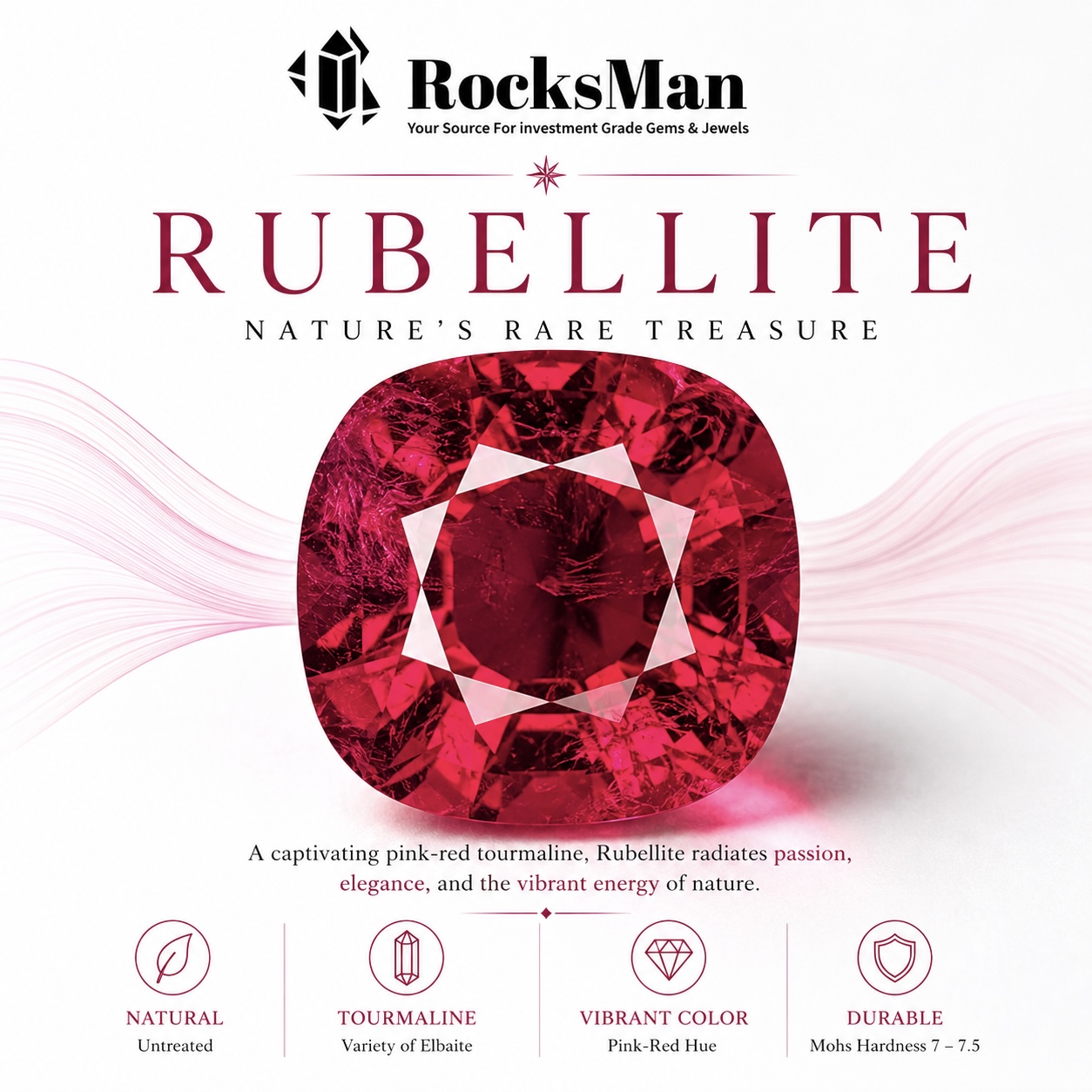
At first glance, a fine rubellite can make you think of ruby.
It can be intensely red, rich pink-red, raspberry, purplish red or deep crimson. But rubellite is not ruby. It is a red to pink variety of tourmaline—and when the color is strong, lively and beautifully saturated, it can be one of the most impressive colored gemstones in the market.
What Is Rubellite?
Rubellite is the trade name commonly used for pink, red, purplish-red, orangy-red and brownish-red tourmaline. GIA lists rubellite among tourmaline’s recognized color varieties.
Rubellite vs. Ruby: What’s the Difference?
Ruby and rubellite are different minerals. Ruby is the red variety of corundum. Rubellite is tourmaline.
| Feature | Ruby | Rubellite |
|---|---|---|
| Mineral | Corundum | Tourmaline |
| Typical color | Red to purplish red | Pink to red and purplish red |
| Mohs hardness | 9 | About 7–7.5 |
The difference affects durability, appearance, cutting, value and how the gemstone should be described.
What Color Makes a Great Rubellite?
Color is the star of rubellite. GIA notes that pink/red tourmaline is one of the most sought-after tourmaline color ranges and that its color can approach the range of ruby and pink sapphire.
GIA: Tourmaline Quality Factors
The most exciting rubellites tend to have strong, lively red or pink-red color rather than dull brownish appearance. Some lean raspberry, others crimson or purplish red.
Why Are Some Rubellites So Dark?
Tourmaline is strongly pleochroic, meaning its color can look different depending on viewing direction. A poorly oriented cut can make strongly saturated material appear overly dark or almost black from certain angles. This makes cutting particularly important.
Is Bright Red Rubellite Rare?
Fine red tourmaline is much less ordinary than the word “tourmaline” might suggest. Large, vivid and visually attractive examples become increasingly interesting to collectors.
GIA identifies bright, pure tones of red, blue and green as among the generally most valued tourmaline colors.
GIA: What Tourmaline Color Is Best?
Where Does Rubellite Come From?
Brazil
Brazil has a long history of producing tourmaline, including fine pink and red material. Minas Gerais is particularly famous for exceptional tourmaline deposits.
Mozambique
Mozambique has become an important source of attractive colored tourmaline, including red and pink material.
Nigeria
Nigeria is another source of tourmaline with attractive red and pink colors. Material varies considerably between deposits, so the individual gemstone matters more than the country name alone.
Other Sources
Red tourmaline occurs in several additional locations around the world. Origin can interest collectors, but a famous locality does not automatically make a gemstone exceptional.
Rubellite Inclusions: Are They a Problem?
Not necessarily. Tourmaline commonly grows in environments rich in liquids, and liquid-filled features and growth tubes are common. GIA notes that red and pink tourmalines can often have eye-visible inclusions without losing their appeal when color is strong.
GIA: Tourmaline Quality Factors
Is Rubellite Treated?
Treatment matters when buying significant tourmaline. Clarity enhancement has been documented in rubellite and other tourmalines. GIA has reported cases where surface-reaching fissures in rubellite were filled to improve apparent clarity.
GIA: Clarity-Enhanced Tourmaline
Treated rubellite is not automatically undesirable, but treatment should be properly disclosed. For an important stone, independent laboratory documentation is worthwhile.
How Is Rubellite Value Determined?
- Color: Strong, attractive red and pink-red colors are especially desirable.
- Saturation: Vivid color generally has more impact than weak or muddy color.
- Tone: Extremely dark stones can lose brightness and life.
- Clarity: Eye-visible inclusions can affect value, although some are accepted in strongly colored rubellite.
- Cut: Proper orientation can make a major difference to brightness and color.
- Size: Large stones with exceptional color and transparency are increasingly scarce.
- Treatment: Detected treatments should be disclosed.
- Origin: Origin can add collector interest when reliably established.
- Certification: Independent documentation adds confidence.
Why Large Rubellite Can Be So Impressive
Tourmaline can occur in large crystals, allowing rubellite to reach sizes that would be extraordinary for many other red gemstones. But large does not automatically mean valuable. Quality has to scale with size.
How to Buy a Natural Rubellite
- Is the red vivid and attractive?
- Does the stone become too dark from certain directions?
- Does it have good transparency?
- Are inclusions distracting?
- Do fractures reach the surface?
- Is the cut helping the stone return light?
- Has treatment been disclosed?
- Is the gemstone natural?
For an expensive rubellite, a laboratory report can establish gemstone identity and document detectable treatments.
Rubellite vs. Pink Tourmaline
GIA describes rubellite as pink, red, purplish red, orangy red or brownish red tourmaline, while noting that some in the trade debate whether the term should apply to pink tourmaline. In practice, rubellite is most strongly associated with the red end of the pink-to-red spectrum.
Rubellite vs. Red Spinel
Both can produce beautiful red gemstones, but they are different mineral species. Red spinel is harder, while rubellite can offer a wider range of pink-red and raspberry-red tones and can occur in spectacularly large crystals.
Is Rubellite Good for Jewelry?
Yes, but it deserves more care than ruby or sapphire. Tourmaline has a Mohs hardness of about 7–7.5. GIA recommends warm, soapy water for cleaning and notes that heat can damage tourmaline.
Why Rubellite Is So Fascinating
Rubellite can imitate the visual impression of ruby without being ruby. It can be intensely red, show the optical character of tourmaline, contain acceptable inclusions, and occur in enormous crystals.
The best rubellite is not valuable simply because it is red. It is valuable because the red is beautiful, the stone has life, the cut works with the material, and the complete combination is rare.
Frequently Asked Questions About Rubellite
Is rubellite a ruby?
No. Rubellite is tourmaline. Ruby is corundum.
What color is rubellite?
It is generally pink, red, purplish-red, orangy-red or brownish-red tourmaline.
Where does rubellite come from?
Important sources include Brazil, Mozambique and Nigeria, among others.
Does rubellite have inclusions?
Yes. Inclusions are common in tourmaline and can be acceptable when the color is strong.
Can rubellite be treated?
Yes. Treatments including clarity enhancement have been documented, so important stones should have treatment properly disclosed.
Is rubellite good for an engagement ring?
It can be, but tourmaline is softer than ruby or sapphire and should be protected from hard impacts.
Looking for a fine natural rubellite?
At RocksMan, we source natural, high-quality rubellite and other tourmalines from trusted suppliers and gemstone-producing regions.
- Request a custom rubellite based on your budget, size, color, origin and treatment preference
- Or explore our available tourmaline collection on our website
- Or visit our Tourmaline selection on Gem Rock Auctions
Looking for something specific? Tell us the size, red tone, origin, treatment preference and budget you have in mind, and we can help source the right stone.


