

Learn
Paraíba Tourmaline: The Complete Guide to Color, Origin, Rarity, Value and Treatment

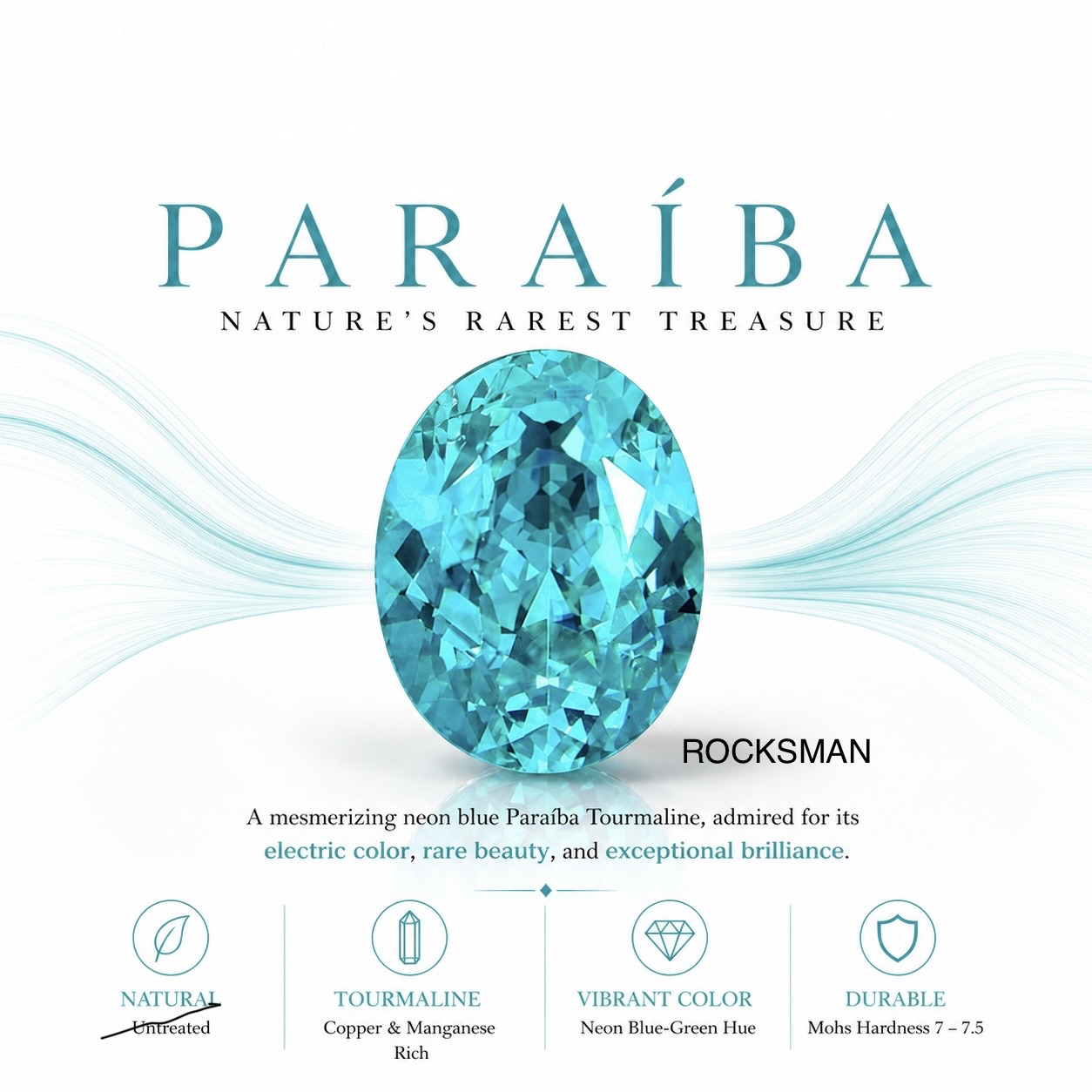
Few gemstones have changed the world of colored stones as dramatically as Paraíba tourmaline.
Its electric blue, neon turquoise, vivid blue-green and extraordinary saturation can seem almost to glow from within. Unlike most blue tourmalines, these remarkable colors are associated with copper and manganese—and that unusual chemistry is one of the reasons Paraíba tourmaline became one of the most coveted colored gemstones in the world.
But what exactly makes a Paraíba tourmaline valuable? Does “Paraíba” mean the stone must come from Brazil? How rare is Brazilian material compared with Mozambique, Nigeria or Ethiopia? And does a heated Paraíba tourmaline still have value?
Let’s explore what makes this gemstone so special.
What Is Paraíba Tourmaline?
Paraíba tourmaline is a copper- and manganese-bearing tourmaline known for its vivid blue, greenish-blue, bluish-green, green and violet-blue colors.
The original material was discovered in the Brazilian state of Paraíba in the late 1980s. The intense neon colors were unlike anything previously seen in tourmaline, and the discovery immediately attracted enormous attention from collectors, dealers and jewelry designers.
GIA explains that the unusual color is associated with significant amounts of trace elements such as copper and manganese. Copper is particularly important because it is responsible for the distinctive colors that separate Paraíba-type tourmaline from ordinary blue and green tourmalines.
GIA: Tourmaline Quality Factors
What Makes Paraíba Tourmaline Different?
The biggest difference is color.
Ordinary tourmaline can occur in beautiful blues and greens, but copper-bearing Paraíba tourmaline can display an exceptionally vivid, highly saturated appearance.
- Neon blue
- Electric blue
- Turquoise blue
- Blue-green
- Neon green
- Violet-blue
- Mint green
The finest stones often have a bright, medium-light to medium tone combined with intense saturation.
Why Does Paraíba Tourmaline Look Neon?
The extraordinary appearance comes from its chemistry.
Copper and manganese play an important role in producing the characteristic vivid colors. This is highly unusual within tourmaline.
Some specimens can even contain tiny inclusions of native copper, meaning almost pure metallic copper occurs inside the gemstone.
This combination of unusual chemistry and intense color is one of the reasons Paraíba tourmaline is so distinctive.
Paraíba Tourmaline vs. Ordinary Blue Tourmaline
Not every blue tourmaline is Paraíba.
| Feature | Paraíba Tourmaline | Blue Tourmaline |
|---|---|---|
| Mineral | Tourmaline | Tourmaline |
| Important coloring elements | Copper + manganese | Often iron |
| Typical appearance | Neon blue, blue-green, green, violet-blue | Blue to greenish blue |
| Saturation | Often exceptionally vivid | Variable |
| Rarity | Extremely rare in fine quality | More widely available |
| Value | Exceptional examples can command major premiums | Generally lower |
The distinction is important because a blue tourmaline should not automatically be marketed as Paraíba simply because it looks blue.
Where Does Paraíba Tourmaline Come From?
Brazil
The original discovery occurred in Paraíba, northeastern Brazil, in the late 1980s.
Brazilian Paraíba tourmaline is historically important and remains highly prized. Fine Brazilian material is often associated with particularly intense color, although there is considerable overlap in appearance between material from different localities.
Mozambique
Mozambique became an important source of copper-bearing tourmaline in the early 2000s.
Mozambican material helped make these spectacular colors more available to the market, although exceptional stones remain scarce.
Nigeria
Nigeria is another important source of copper-bearing tourmaline.
Nigerian material can display striking blue, greenish-blue and green colors. Laboratory analysis may be required to establish geographic origin because visual appearance alone is not sufficient.
Ethiopia
GIA and Gübelin Gem Lab have reported Ethiopia as a new source of copper-bearing tourmaline meeting the widely accepted definition of Paraíba tourmaline.
This development demonstrates that Paraíba-type copper-bearing tourmaline continues to emerge from new geological environments.
GIA and Gübelin: New Ethiopian Source of Copper-Bearing Tourmaline
Does Paraíba Mean the Stone Comes From Brazil?
Not necessarily.
The name originated from the Brazilian locality where the material was first discovered. However, the term Paraíba tourmaline is now widely used in the trade for qualifying copper-bearing tourmalines regardless of geographic origin.
Brazilian origin is a separate characteristic that should be established through an appropriate laboratory report when origin matters.
Why Is Brazilian Paraíba Often More Expensive?
Brazilian Paraíba has enormous historical importance and is associated with the original deposit.
The finest Brazilian examples can combine extremely vivid color, high saturation, attractive tone, strong transparency, exceptional rarity and documented Brazilian origin.
But origin should not replace judging the actual gemstone. A less attractive Brazilian stone is not automatically better than an exceptional stone from Mozambique, Nigeria or another recognized locality.
How Rare Is Fine Paraíba Tourmaline?
Very rare.
Paraíba rough is highly valuable, and cutters generally have to make careful decisions about orientation and weight retention.
Fine stones above one carat are uncommon, while exceptionally large stones with strong neon color and good transparency can be extraordinary.
Color is more important than size when evaluating Paraíba tourmaline. A smaller stone with exceptional electric-blue color can therefore be more desirable than a significantly larger stone with weaker or darker color.
What Color Makes the Best Paraíba Tourmaline?
Color is the star of Paraíba.
The most desirable examples tend to have:
- Strong saturation
- Bright appearance
- Medium-light to medium tone
- Vivid blue or blue-green color
- Excellent visual intensity
- Good transparency
Electric blue and neon blue are particularly sought after. Green and bluish-green stones can also be beautiful and valuable, especially when the color is vivid and lively.
Why Are Some Paraíba Tourmalines So Bright?
The combination of chemical composition and optical properties produces an extraordinary visual effect.
Copper-bearing tourmalines can show intense absorption characteristics that create highly saturated colors. When the stone also has a bright tone and good transparency, the result can be a color that appears almost illuminated from inside.
Does Paraíba Tourmaline Have Inclusions?
Yes. Like other natural tourmalines, Paraíba tourmaline can contain inclusions such as liquid-filled features, growth tubes, two-phase inclusions and mineral inclusions.
Inclusions do not automatically make a Paraíba unattractive. However, because Paraíba is valued heavily for its bright appearance and transparency, inclusions that significantly reduce transparency can affect value.
Can Paraíba Tourmaline Be Heated?
Yes. Heat treatment is known to be used on copper-bearing tourmaline.
Heating can modify the oxidation state of manganese and, in some stones, reduce purple or pink components to produce a bluer or greener appearance.
Importantly, heat treatment is not always detectable. Therefore, treatment disclosure is an important consideration when buying a significant Paraíba tourmaline.
A heated stone is not automatically a bad stone. What matters is that the treatment is properly disclosed and reflected in the description and price.
How Is Paraíba Tourmaline Value Determined?
- Color: Vivid electric blue and neon blue colors can command exceptional premiums.
- Saturation: Strong saturation gives Paraíba its characteristic visual impact.
- Tone: Very dark material may lose brightness and appear less neon.
- Clarity: Good transparency can significantly increase desirability.
- Cut: Orientation and cutting can make a dramatic difference.
- Size: Large Paraíba tourmalines are rare, but size should be judged alongside color.
- Treatment: Any known treatment should be disclosed.
- Origin: Geographic origin can affect collector and market interest.
- Certification: Independent laboratory documentation can add confidence.
Paraíba Tourmaline vs. Paraíba-Type Tourmaline
You may encounter both terms in the market.
“Paraíba-type” is often used when discussing copper-bearing tourmalines from various localities that show the characteristic chemistry and color.
The exact terminology used in a commercial listing should be clear and should not imply a Brazilian origin unless that origin has been established.
Can Paraíba Tourmaline Show a Cat’s-Eye?
Yes—and this can be extremely unusual.
GIA has documented a Brazilian Paraíba tourmaline displaying a sharp cat’s-eye effect. In that specimen, fine parallel growth tubes produced the phenomenon known as chatoyancy.
A combination of vivid Paraíba color, good transparency, strong chatoyancy and Brazilian origin can make such a stone exceptionally rare and noteworthy.
GIA: Cat’s-Eye Brazilian Paraíba Tourmaline
Is Paraíba Tourmaline Good for Jewelry?
Yes, with reasonable care.
Tourmaline has a Mohs hardness of approximately 7–7.5, making it suitable for many types of jewelry. However, it is softer than ruby or sapphire and should be protected from severe impacts.
For cleaning, gentle methods are preferred. Avoid exposing tourmaline to unnecessary high heat.
How to Buy a Natural Paraíba Tourmaline
- Is the gemstone natural?
- Is it copper-bearing?
- What is the exact color?
- Is the color vivid and strongly saturated?
- Is the stone too dark?
- How good is the transparency?
- Are inclusions distracting?
- Has the stone been heated?
- Is treatment detectable?
- What is the claimed geographic origin?
- Can the origin be supported by a laboratory?
- Does the certificate match the gemstone?
- Is the price justified by the actual quality?
For a major purchase, an independent laboratory report can provide significantly more confidence.
What Should You Look for in a High-Quality Paraíba?
The ideal combination is not simply “large and blue.”
Look for a stone with:
Vivid color + strong saturation + attractive tone + good transparency + excellent cut + natural origin + proper disclosure.
When these characteristics come together, Paraíba tourmaline can be one of the most visually spectacular colored gemstones available.
Why Paraíba Tourmaline Commands Such High Prices
The answer is a combination of rarity, color and demand.
The discovery of Paraíba introduced a completely new visual experience to the tourmaline market. The electric colors were immediately distinctive, and exceptional stones became highly sought after.
Fine material remains difficult to obtain, and the most attractive combinations of color, transparency, size and origin are particularly scarce.
Is a Paraíba Tourmaline From Brazil Always Better?
No.
Brazilian origin can add significant desirability, especially when reliably documented, but the gemstone itself still matters.
A buyer should consider the complete combination of:
Color → Saturation → Tone → Transparency → Cut → Size → Treatment → Origin
Origin should be one part of the evaluation rather than the only reason a stone is considered valuable.
Why Paraíba Tourmaline Is So Fascinating
Paraíba tourmaline is one of those gemstones that changed what collectors expected from tourmaline.
Its extraordinary copper-related colors can range from electric blue to vivid green, while its rarity makes exceptional specimens highly sought after.
The story has also continued to evolve. What began with a remarkable discovery in Brazil later expanded to important deposits in Nigeria and Mozambique—and Ethiopia has now emerged as another confirmed source of Paraíba tourmaline.
Yet the fundamental attraction has never changed:
That unmistakable neon color.
The best Paraíba tourmaline is not valuable simply because it is called Paraíba. It is valuable because the color is extraordinary, the stone has life, the cut works with the material, and the complete combination is rare.
Frequently Asked Questions About Paraíba Tourmaline
Is Paraíba tourmaline a real tourmaline?
Yes. Paraíba tourmaline is copper- and manganese-bearing tourmaline.
Is Paraíba tourmaline only from Brazil?
No. Copper-bearing tourmalines meeting the widely accepted Paraíba definition have been documented in Brazil, Mozambique, Nigeria and Ethiopia.
Is Brazilian Paraíba more valuable?
Brazilian material is often more highly valued, but the actual color, saturation, transparency, size, treatment and quality of the individual stone remain extremely important.
What color is the most valuable Paraíba?
Vivid, strongly saturated blue and blue-green colors—especially electric or neon-looking colors—are among the most desirable.
Can Paraíba tourmaline be heated?
Yes. Heat treatment is known in copper-bearing tourmaline, and treatment may not always be detectable.
Is untreated Paraíba tourmaline rare?
Fine untreated material is highly desirable, particularly when strong color and transparency are combined with reliable laboratory documentation.
Does Paraíba tourmaline have inclusions?
Yes. Natural Paraíba tourmalines can contain various inclusions. Their importance depends on how much they affect transparency and appearance.
Is Paraíba tourmaline good for an engagement ring?
It can be used in an engagement ring, but tourmaline is softer than ruby or sapphire. A protective setting and reasonable care are recommended.
Can Paraíba tourmaline be larger than one carat?
Yes, but fine stones above one carat are relatively uncommon, and exceptional larger stones can be particularly valuable.
Can a laboratory determine whether Paraíba tourmaline is from Brazil?
Geographic origin determination requires advanced analytical methods. GIA uses quantitative chemical analysis involving trace elements to distinguish material from known sources.
Looking for a Fine Natural Paraíba Tourmaline?
At RocksMan, we source natural gemstones from trusted suppliers and gemstone-producing regions, with a focus on quality, authenticity and accurate disclosure.
- Request a custom Paraíba tourmaline based on your budget, size, color, origin and treatment preference
- Explore our available tourmaline collection on the RocksMan website
- Ask us about specific Paraíba-type material and available laboratory documentation
Looking for something specific?
Tell us the size, color, origin preference, treatment preference and budget you have in mind, and we can help source the right stone.
Further Reading
GIA: Tourmaline Quality Factors
GIA: Geographic Origin Determination of Paraíba Tourmaline
GIA: Cat’s-Eye Brazilian Paraíba Tourmaline
GIA & Gübelin: New Ethiopian Source of Copper-Bearing Tourmaline


